Spatial OS
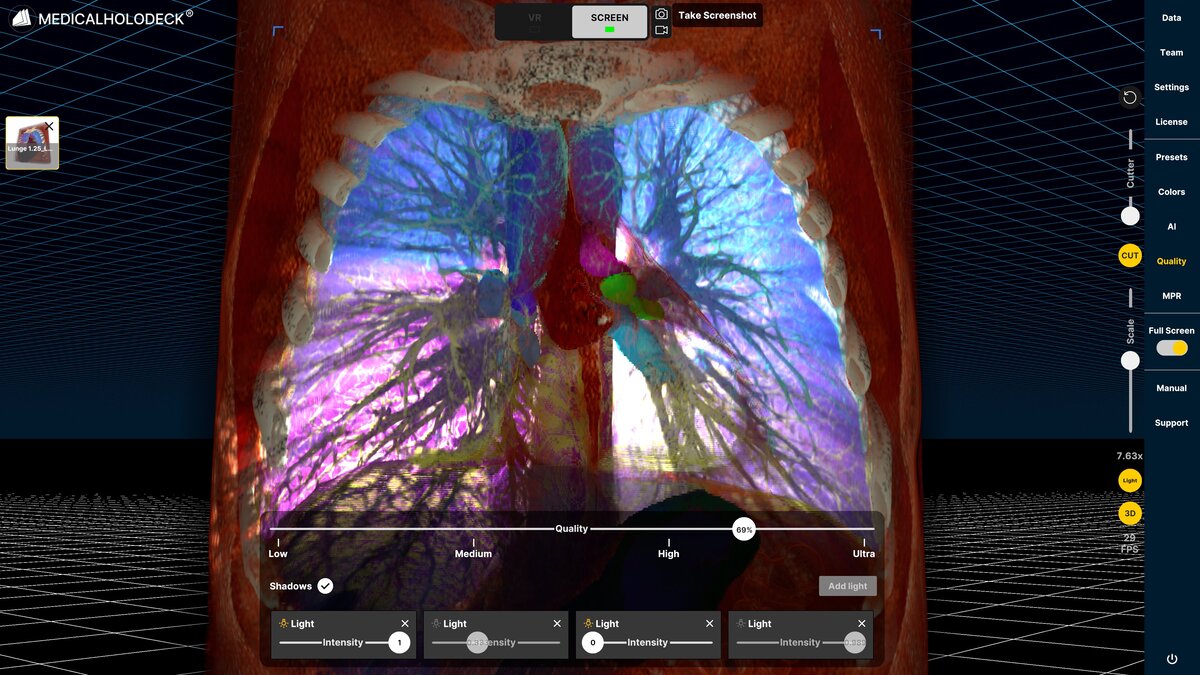
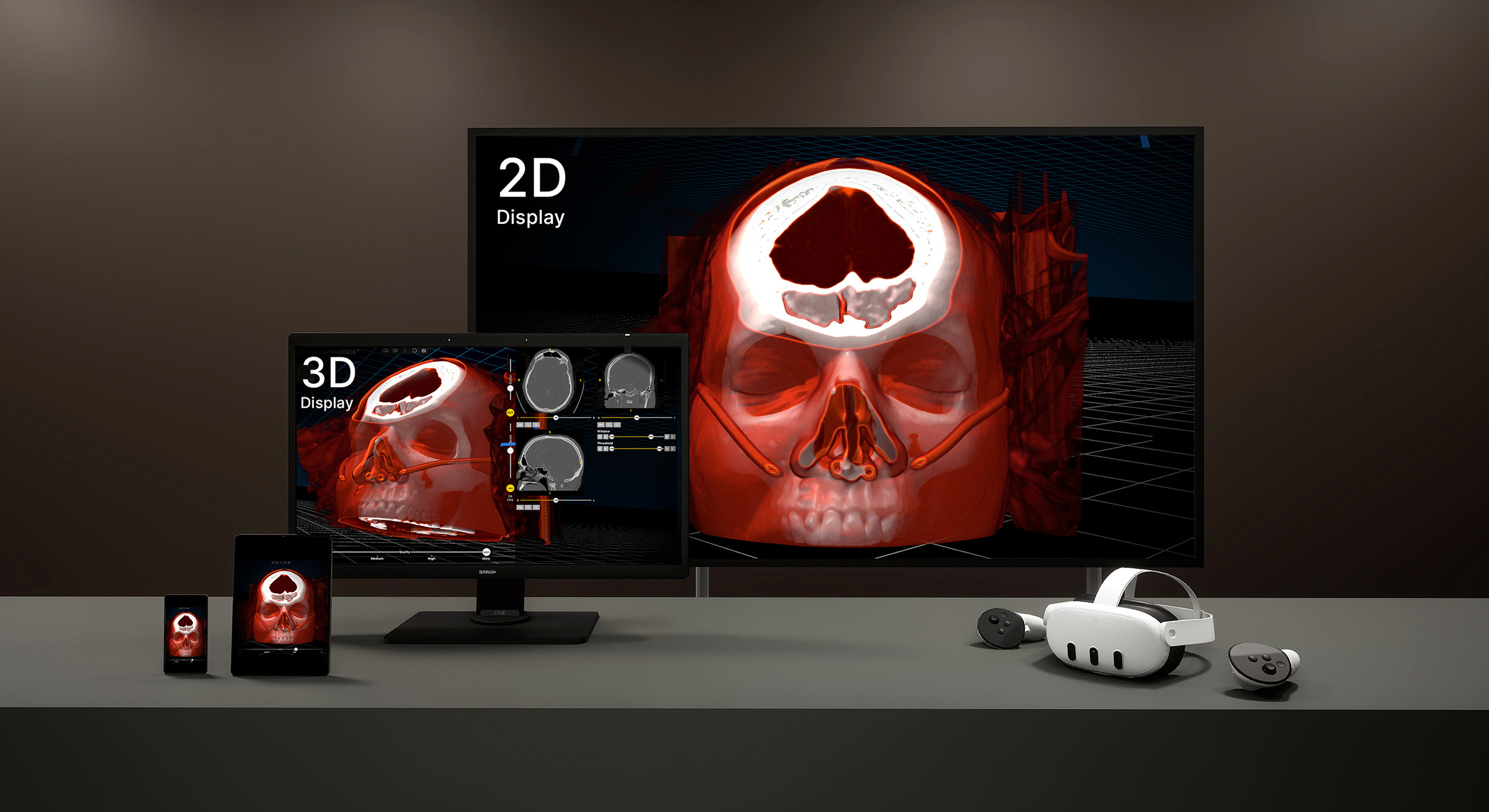
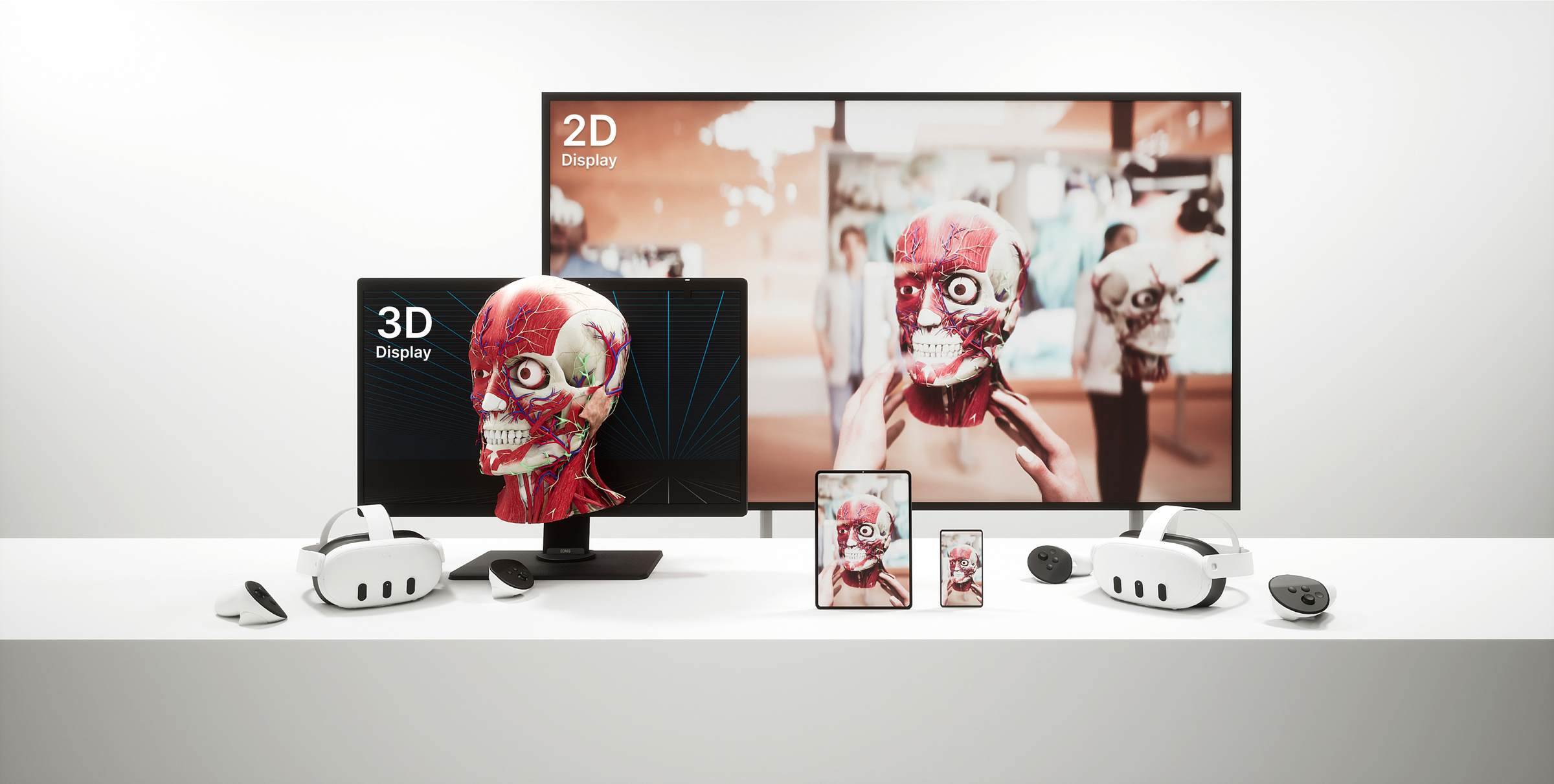
The human body is not flat. Yet medical imaging and anatomy are still primarily interpreted in two dimensions, creating a gap between data and understanding. Spatial OS brings medical imaging finally into true 3D. It runs on autostereoscopic 3D displays, standard 2D screens, and virtual reality - all from one Windows computer, simultaneously, with individual perspectives.
Existing customers receive a free upgrade to Spatial OS.
Contact us to activate, download, or learn more.
Free access for students
As a contribution to improving medical education, we now offer free access to all enrolled medical students.
Download and send proof of enrollment to info@medicalholodeck.com.
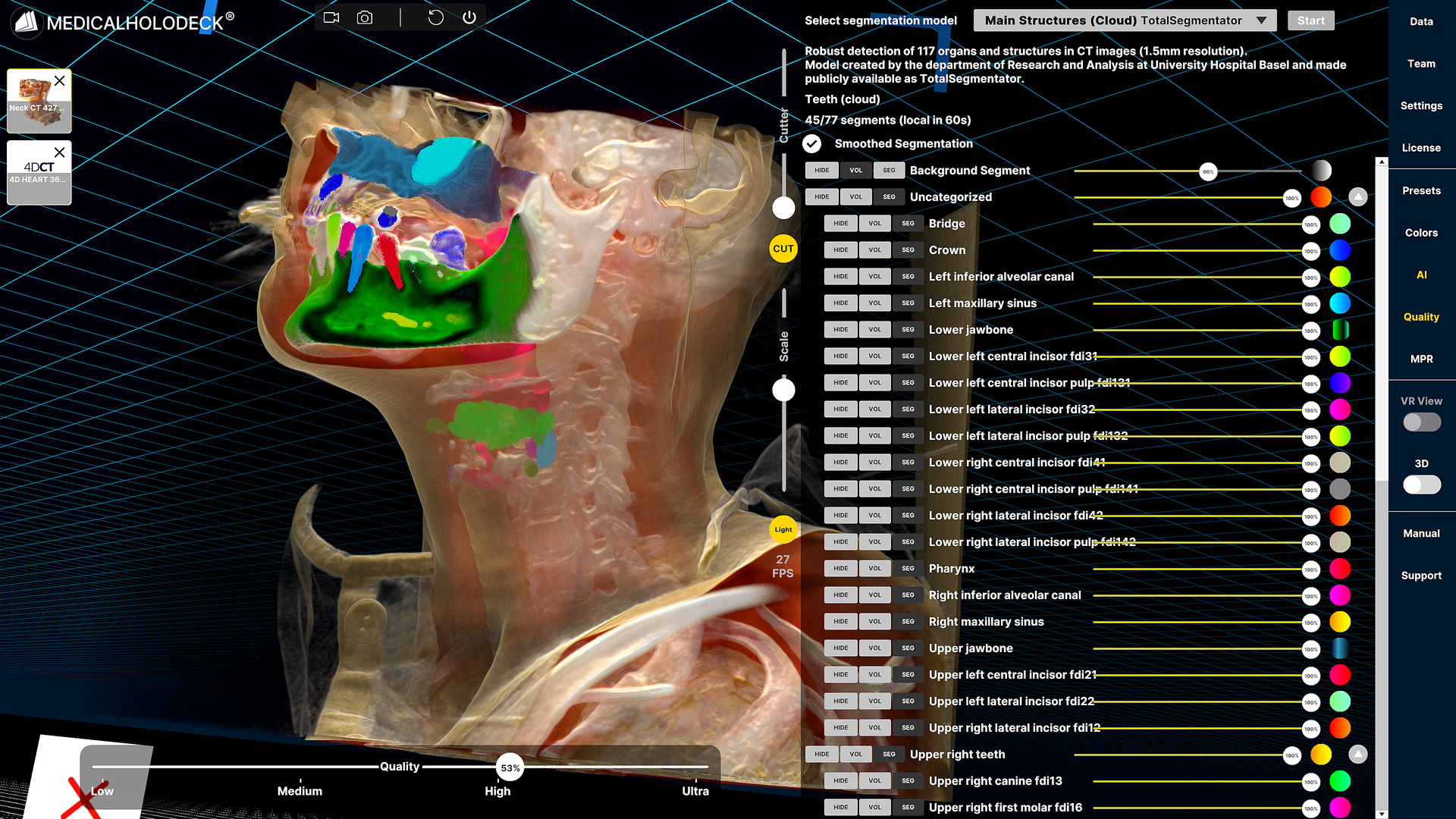
New TotalSegmentator models
The update includes new segmentation models, now covering:
-
Craniofacial structures
-
Abdominal muscles
-
Teeth
-
Trunk cavities
These additions enable faster and more detailed generation of patient-specific 3D models directly from imaging data.
Improved performance
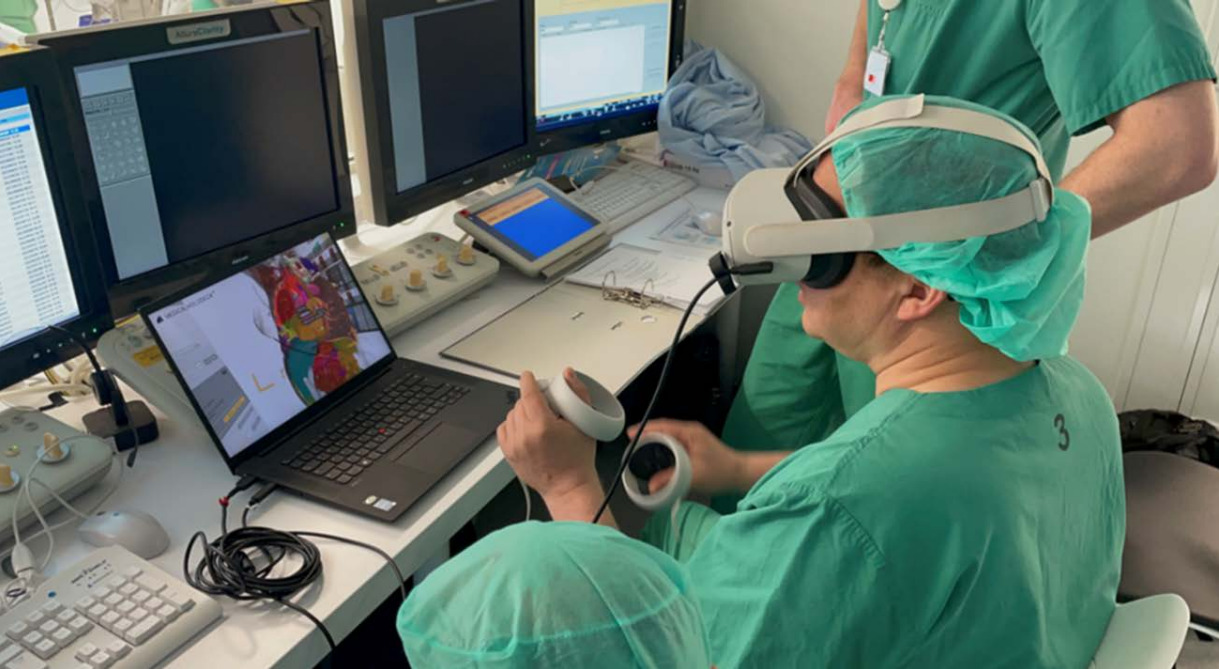
Performance has been improved across standalone VR and PC VR. Rendering is faster and more stable, enabling smoother navigation of large CT and MRI datasets, faster loading times, and a more responsive experience for both individual use and collaborative sessions.
Flexible hardware setups
Medicalholodeck supports flexible hardware setups, from standalone VR headsets to high-performance PCs with VR headsets, glasses-free 3D displays, and standard 2D screens. Learn more here.
Latest publications
Find the latest scientific publications, case studies, and updates on how Medicalholodeck is used in research, education, and clinical communication. Explore recent developments and real-world applications here.
Support available
Do you have questions about features, hardware, or licensing? We are here to help. Get in touch with our team for guidance and support.
Follow us on LinkedIn
Stay updated on product releases, scientific publications, and real-world applications of Medicalholodeck. Follow us for regular updates and insights.
For more information, contact info@medicalholodeck.com April 2026