Implementing virtual reality based surgical topographic anatomy for the education of medical students: a pilot study
https://doi.org/10.1186/s12909-025-08563-zAdvantages of VR
Virtual reality is a valuable tool for teaching complex surgical anatomy. It provides 3D visualizations, allowing students to examine structures from multiple angles. This helps them understand the spatial relationships between anatomical parts.
VR also offers a safe and ethical learning environment, without the limitations of cadaver-based teaching. It is more accessible and can reduce the costs of traditional labs. In addition, VR enhances learning outcomes and engages students, potentially sparking interest in surgical careers.
Digital dissection labs
While cadaveric dissection provides a deep understanding of anatomy, its use is limited by safety concerns, costs, accessibility issues, and ethical considerations. VR offers a solution through digitized cadavers, which can be explored in true 3D, providing an engaging and effective learning experience.
Students can examine fully digital bodies in detail, explore structures layer by layer, and gain a deeper understanding of human anatomy in an interactive environment.
Using VR for teaching: a pilot study
Ramspott et al. (2026) explored whether virtual reality can be used to teach complex surgical anatomy to medical students and whether it provides meaningful educational value. To address this, they designed a two-day VR-based teaching program followed by an evaluation using questionnaires.
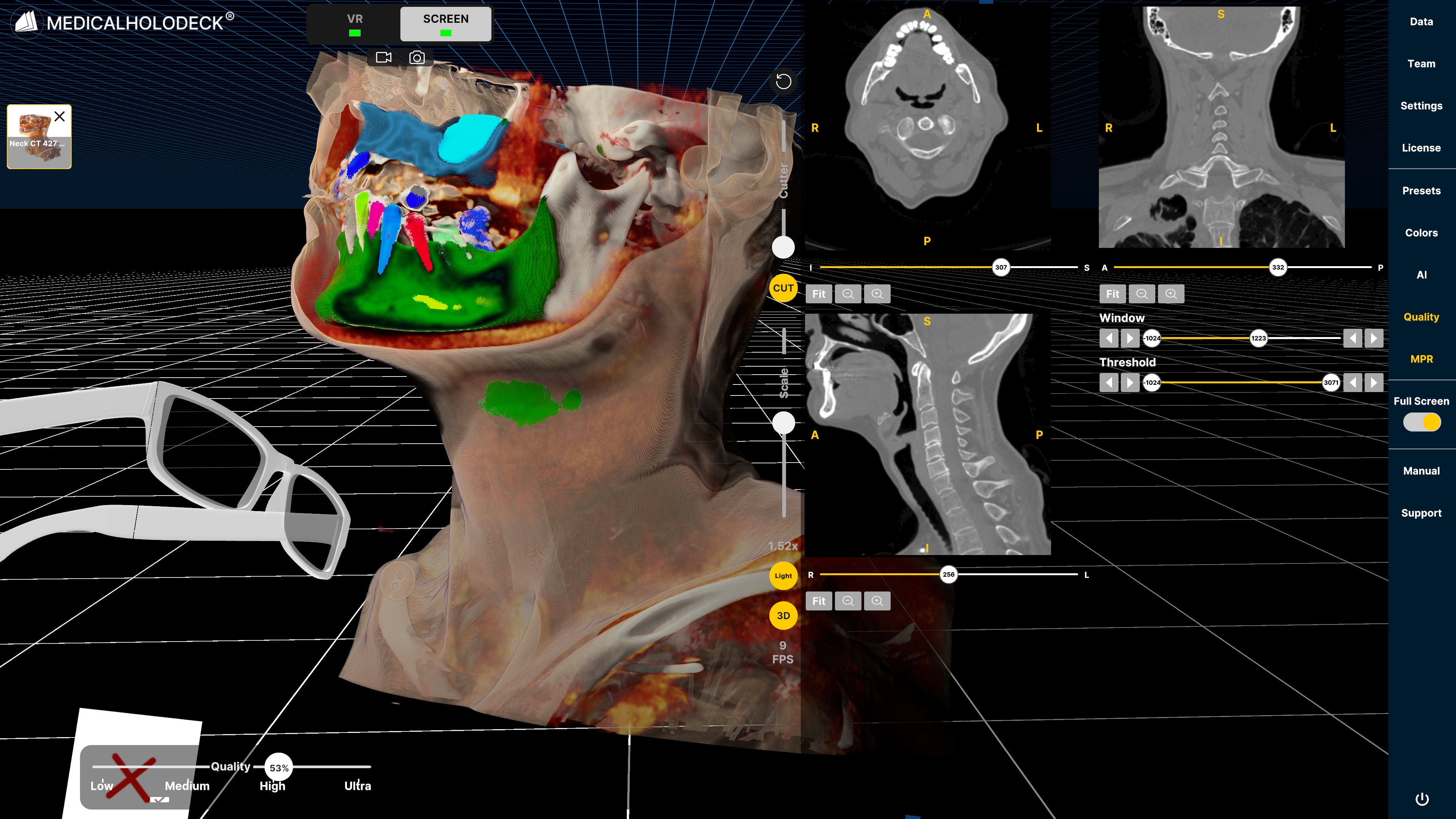
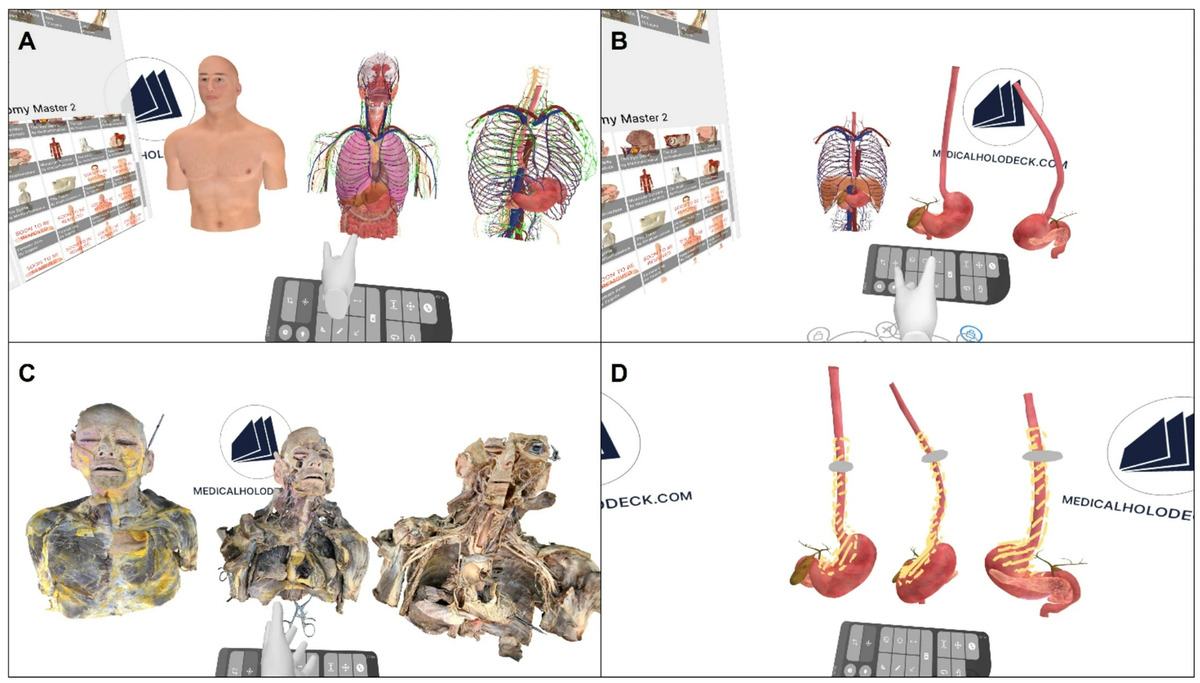
During the sessions, students interacted with virtual anatomical models provided by Medicalholodeck, including both schematic and digitized cadaveric models, to explore and identify anatomical structures.

General perception of virtual reality (VR) exercises (A: usefulness, B: usability, C: knowledge gain). The ratings were based on a discrete numerical scale ranging from 0 (useless/difficult to use/no knowledge gain) to 10 (very useful/very workable/high knowledge gain). Each data point represents one participant. The median is indicated by the horizontal line. Data were analyzed using the Mann-Whitney-U Test. VR: virtual reality, ns: not significant
Student feedback
Students rated the VR exercises as highly useful and educationally valuable. Participants also reported a high level of knowledge gain (median score of 8) and found the VR system easy to use, indicating good usability. These positive evaluations were consistent across age, gender, and level of medical education, with no statistically significant differences between groups.
In addition, students felt that the VR-based anatomical models closely resembled cadaveric dissection, and most participants perceived clear teaching advantages of virtual patients compared with live patients. Overall, student feedback demonstrated strong acceptance of VR as an effective and engaging tool for teaching complex surgical anatomy.
Educational value of immersive 3D learning
This study showed that VR-based teaching of mediastinal and abdominal anatomy is feasible and well-received by medical students. Using virtual models, students explored complex anatomy from multiple perspectives and reported high usefulness, teaching value, and knowledge gain.
The results align with previous studies showing VR enhances learning and understanding of complex anatomy. VR effectively complements traditional anatomy teaching and serves as an alternative when cadaver resources are limited.
Teach and train human anatomy with Medicalholodeck
Dissection Master offers digitized cadavers for interactive 3D exploration with annotated structures, while Anatomy Master provides schematic anatomical models.
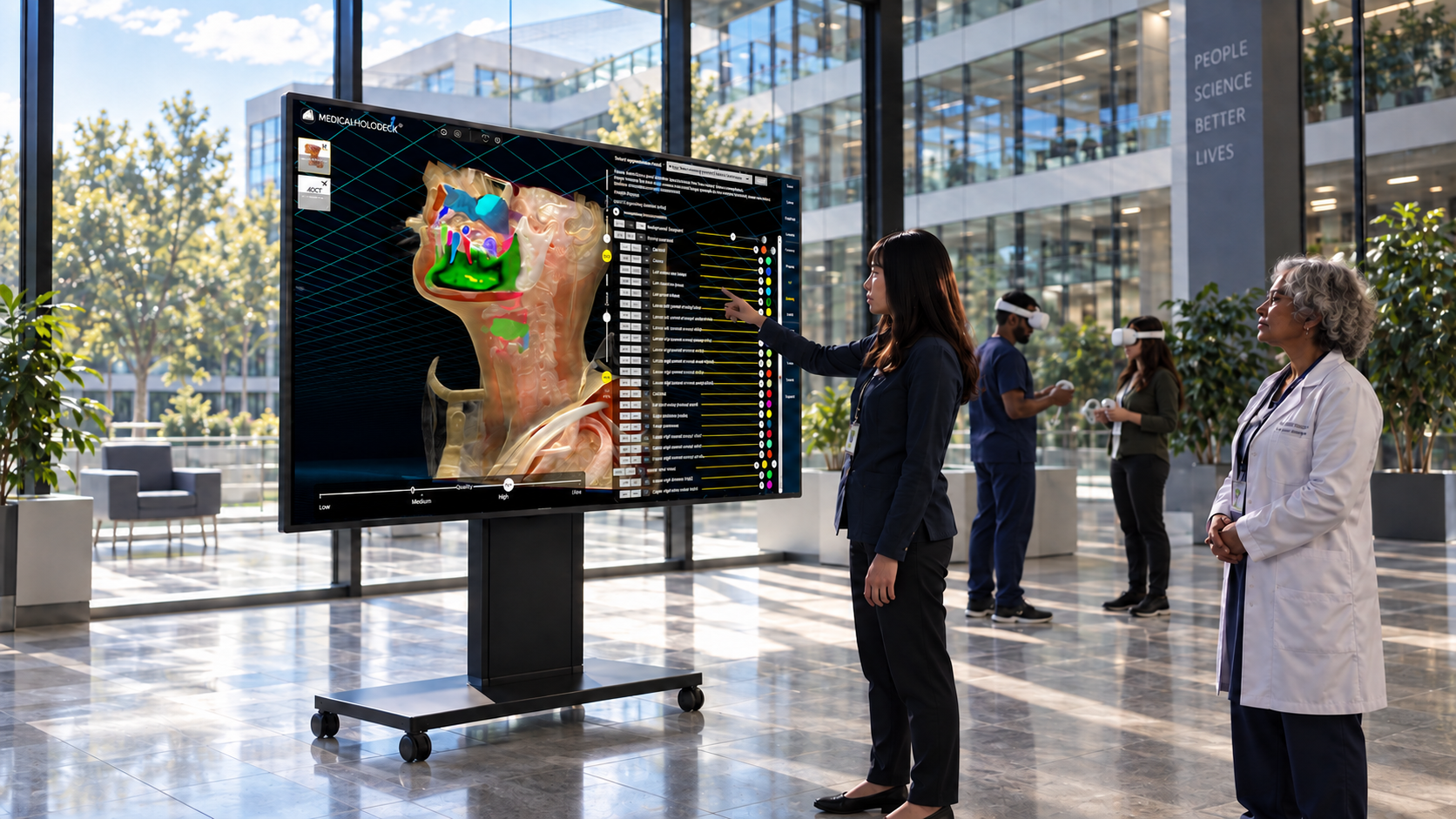
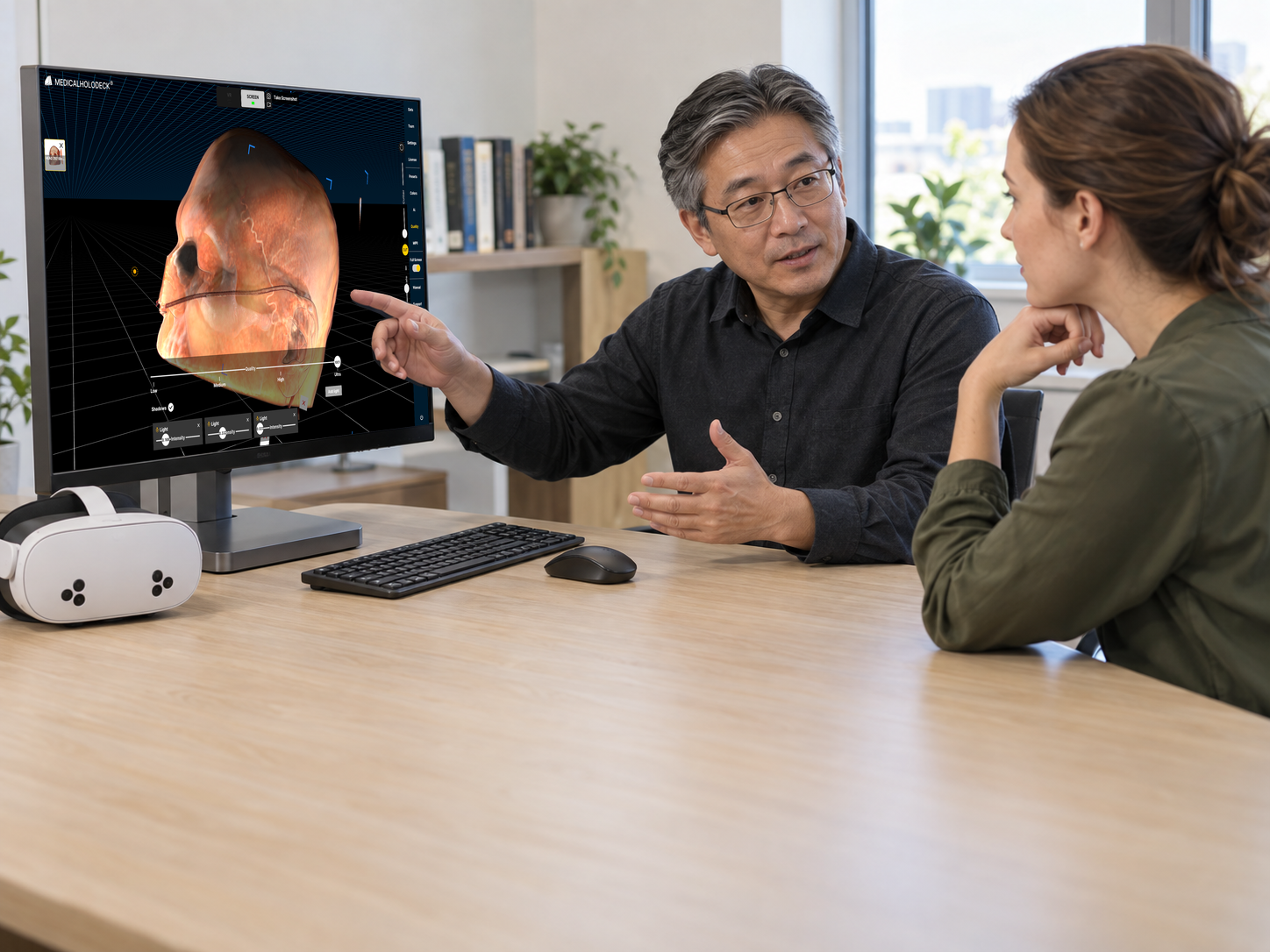
Medicalholodeck works on VR headsets, PCs, iPads, and iPhones for flexible use in hospitals, classrooms, and training centers. Learn more about supported hardware here.
For more information, contact info@medicalholodeck.com April 2026