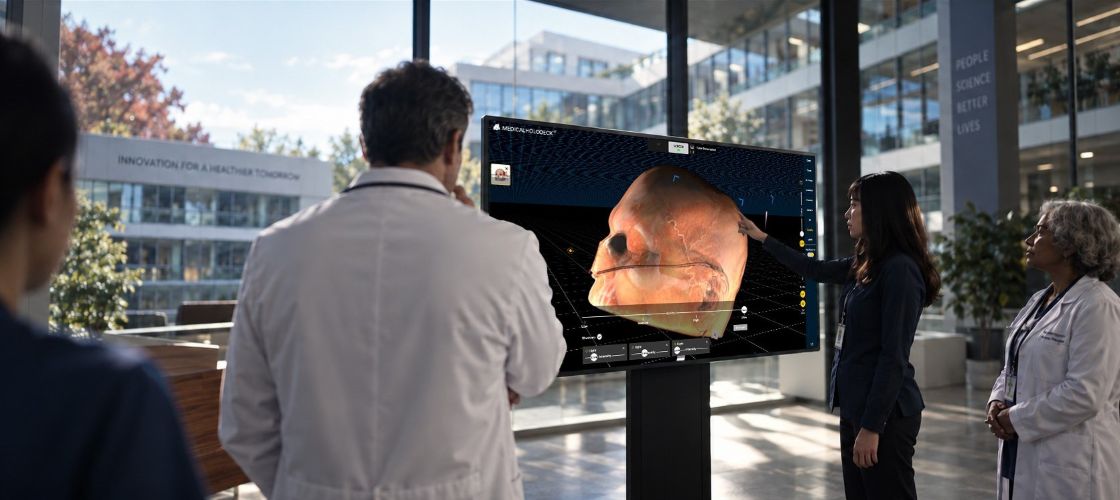
Learning beside an expert works, but it does not scale. A team at Weill Cornell Medicine recorded a procedure as a spatial lesson trainees can enter anywhere, using the Medicalholodeck anatomy sandbox.
Spatial procedural education
Learning beside an expert works, but it does not scale. A team at Weill Cornell Medicine recorded a procedure as a spatial lesson trainees can enter anywhere, using the Medicalholodeck anatomy sandbox.
Reimagining pain procedural education through spatial education co-presence through recorded avatar (SPECTRA) lessons. Interventional Pain Medicine, 5(3), 100822.
Oranicha Jumreornvong, Ana Portilla, Jeniffer Rios Rojas, Rebecca Howard, Mina Girgis, John Rubin, Robert White, Rohan Jotwani (2026)
Apprenticeship training has produced generations of skilled proceduralists, but access to it is uneven. Case volume, training time, and the availability of subspecialty mentors differ widely between institutions and countries, and nearly half of pain fellows report unmet training needs in spinal cord stimulation.
Video extends that reach, though it places the learner outside the procedural field. Depth, operator positioning, and needle trajectory relative to anatomy are difficult to convey from a fixed camera angle. Immersive VR restores the spatial dimension, but live collaborative teaching still depends on the expert and learner being available at the same time.
SPECTRA (Spatial Education Co-Presence Through Recorded Avatar Lessons) removes that scheduling requirement. The instructor's performance is captured once as spatial data: hand position, tool trajectory, gaze direction, equipment placement, and narration, all preserved within the 3D scene rather than flattened into a camera recording.
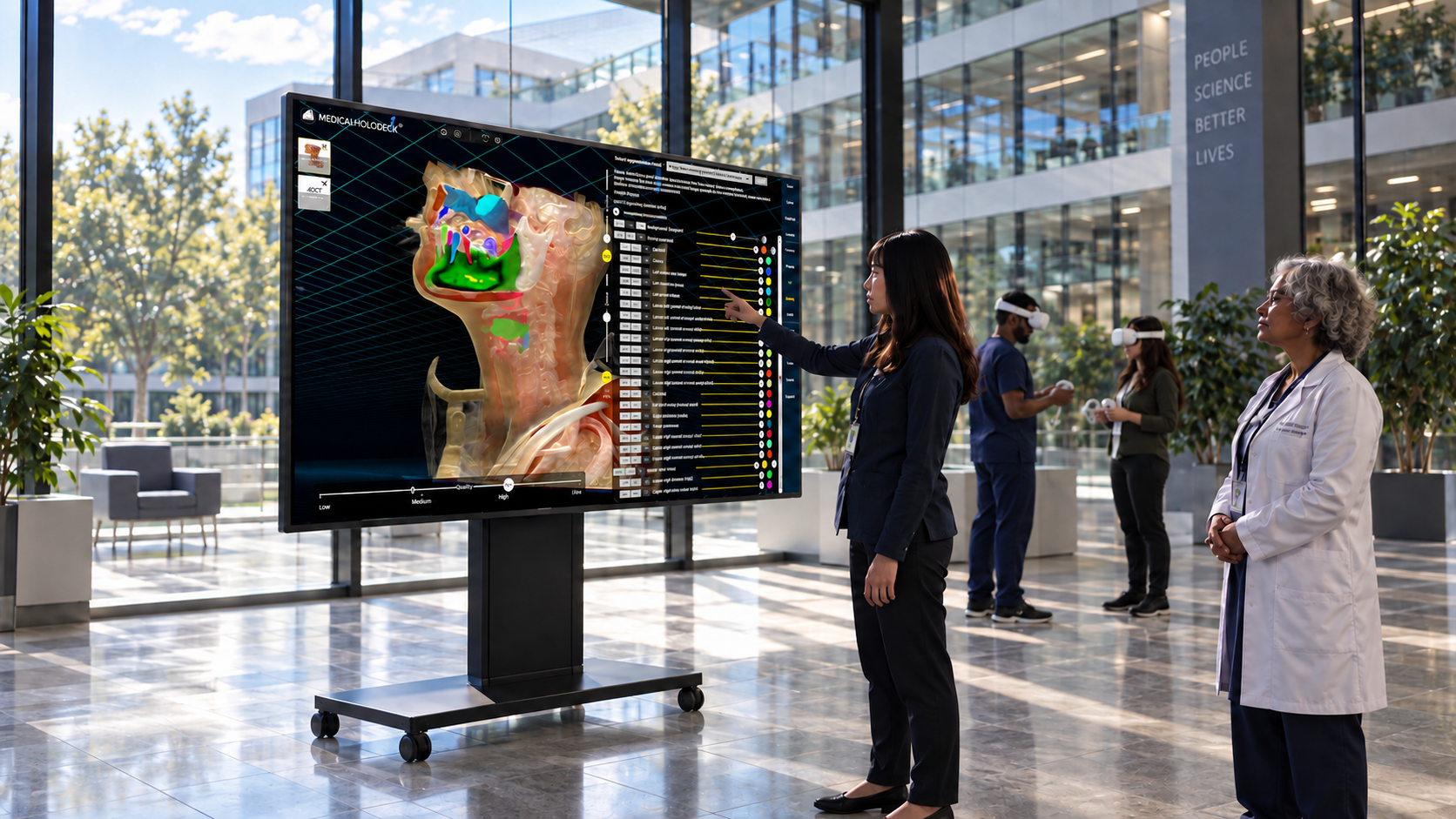
During playback the learner enters the same spatial scene alongside a recorded avatar of the instructor. They can move around the procedure, change viewpoint, pause to inspect where the needle sits relative to a landmark, and hear narration in another language without re-recording the session.
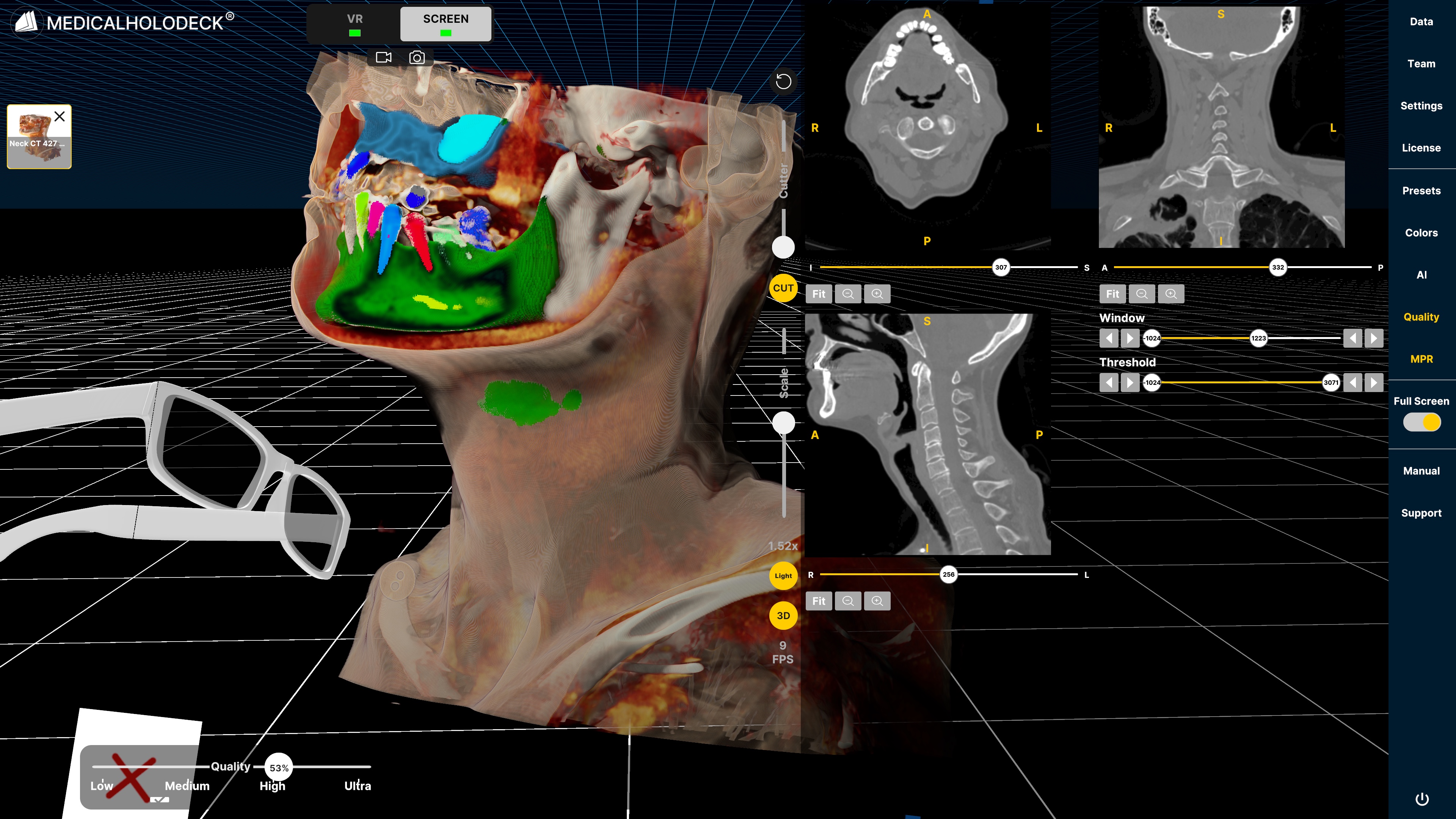
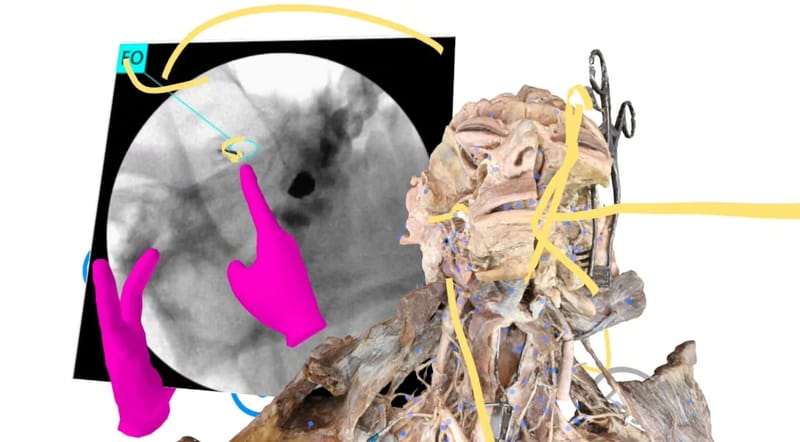
The team built a module on percutaneous Gasserian ganglion intervention using the Medicalholodeck anatomy sandbox, which combines cadaveric dissection data with volumetric imaging of the facial and skull base region. A faculty member performed the procedure in VR while SPECTRA captured the approach angle, needle trajectory relative to the foramen ovale, C-arm positioning, and commentary.
The module was then deployed to more than 100 trainees at Universidad Francisco Marroquín in Guatemala, where on-site subspecialty faculty were not available. Formal evaluation of learning outcomes is ongoing, and the authors position the approach as a complement to supervised training rather than a replacement for it.
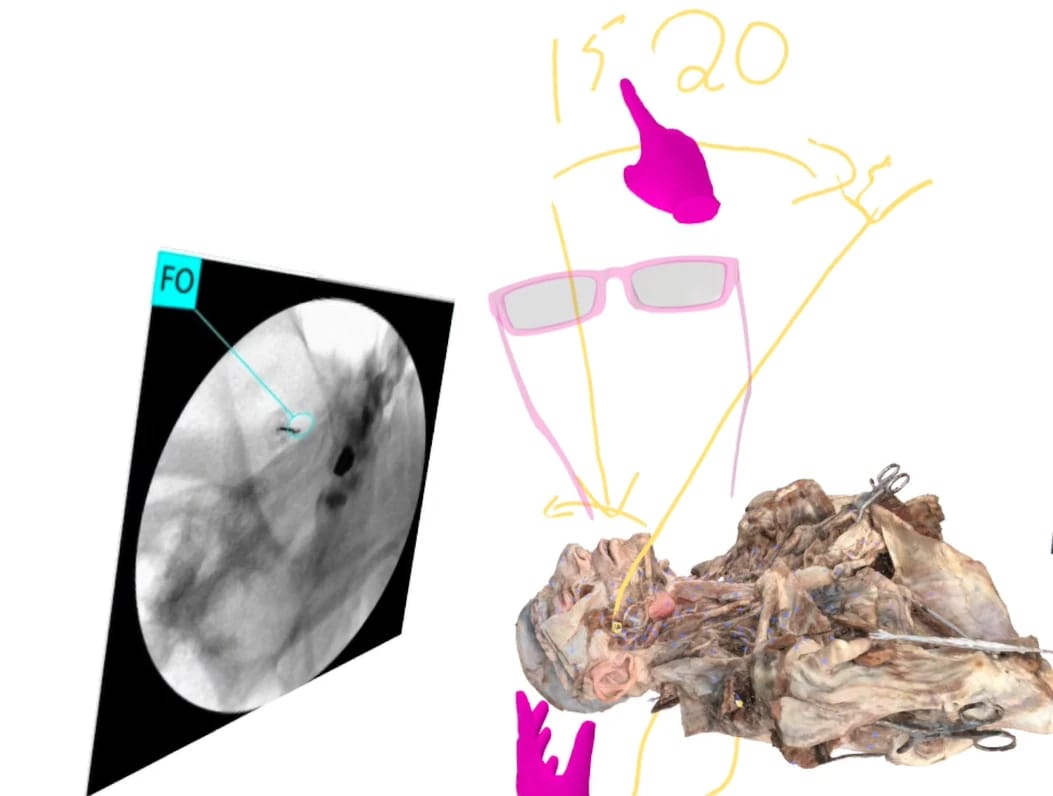
RecordXR captures a full session in spatial form, including movement, gestures, interaction, and voice, and replays it as an avatar inside the same 3D scene. RecordXR Studio allows these recordings to be edited and prepared as reusable spatial lessons.
One session recorded with an experienced proceduralist can become a lesson trainees can enter repeatedly, independent of where the original teaching took place.
Try it yourself and see how spatial recording can extend your teaching. Download Medicalholodeck here.
For more information, contact info@medicalholodeck.com September 2026